Sometime in the past few weeks, without a launch event or a line in its own annual results, Cell C switched on 5G. The challenger brand now claims the widest 5G footprint in South Africa while owning zero of the towers carrying its signal. It’s the most honest network launch this industry has seen in years.
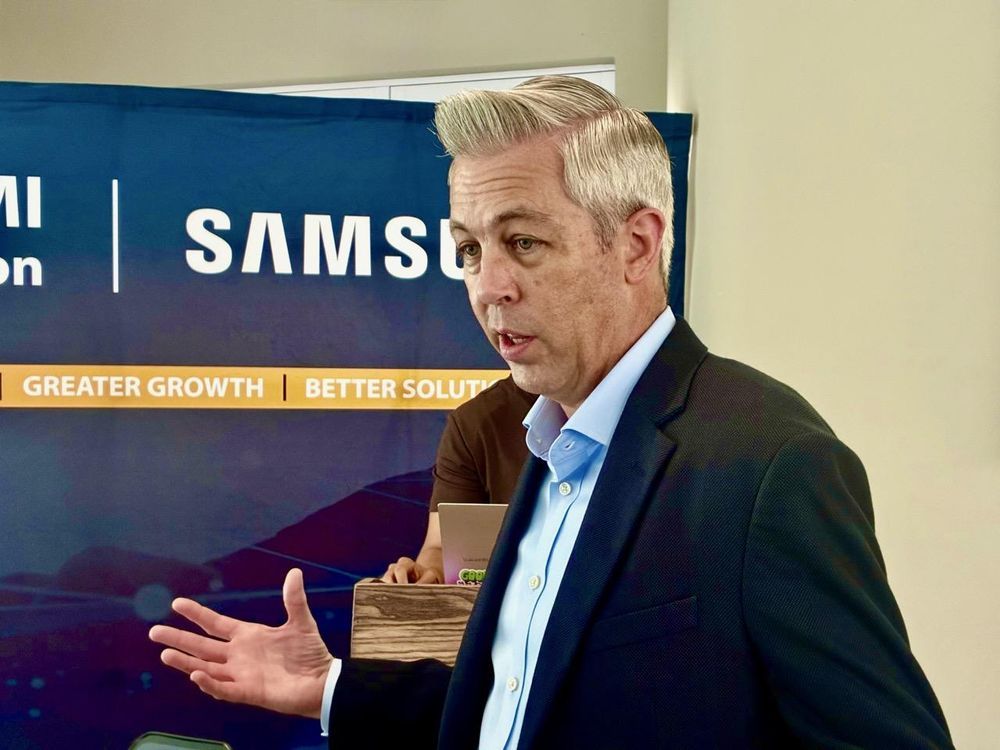
Confirmation only surfaced because someone asked. On Friday, the same day Cell C published its first full-year results since listing, CEO Jorge Mendes admitted the network was already live, adding he only mentioned it because he’d been asked. No fanfare, no tariff table.
A national network stitched from other people’s towers
Cell C shut its own radio network, all 5,503 towers, by June 2023 and now rides roughly 29,000 host sites instead. Prepaid customers run on an MTN-powered virtual network, postpaid users roam Vodacom’s infrastructure over shared spectrum. Switching on 5G meant both hosts freeing capacity and Cell C rebuilding its core.
The coverage claim sounds absurd until you parse it. Every Vodacom 5G site plus every MTN 5G site, on 2.6GHz and 3.5GHz, technically adds up to the country’s biggest footprint. Mendes is right. He’s also describing a lease, not an asset.
Forums have been merciless. One long-running thread asked the blunt version: how can you be the network of networks when you don’t have your own network? Another veteran called Cell C a half-baked network years before the towers came down. Fair jabs, but they miss the history.
The dependence is older than the towers. Scroll Cell C’s support archive back to February 2011 and there’s a customer asking about roaming charges, with the reply confirming a Vodacom agreement.
Hi @Lola_Ngudu, not at all hence we are not charging for roaming. We have an agreement with Vodacom.
— CellC Support (@CellC_Support) February 17, 2011
Even 5G itself isn’t new here. In 2021, Cell C contract SIMs briefly touched Vodacom’s 5G layer before being deliberately blocked. This week is that glitch, finally official.

The catch buried in the coverage map
Renting the widest network means accepting everyone else’s priorities. Put a Cell C SIM and an MTN SIM on the same tower and the host consistently wins, averaging around 85Mbps while the guest trails. Cell C blames its own internet breakout and migration phasing. The pattern smells like wholesale traffic queued behind retail, and none of it is in Cell C’s control.
Experience also splits by customer type. Prepaid runs on MTN’s layer, postpaid roams Vodacom’s, so two customers side by side can face very different 5G availability. The Vodacom layer has no 2G or 3G safety net, which makes VoLTE the hidden dependency. Around a million customers have migrated, three million haven’t, and older handsets could lose reliable calling before they ever see a 5G icon. Upgrading is the fix until you remember what hardware costs here.
There’s also nothing to sell yet. No 5G tariffs, no bundles, no fixed wireless, and Mendes admits the FWA commercial structures aren’t built. Comsol switched on a purpose-built wholesale 5G broadband network the day before, 60MHz of spectrum covering a million-plus Gauteng households, first ISP live next month. Cell C named that market, then handed someone else the head start.
Confirmed talks with Starlink and Amazon as coverage partners tell you where his head is. Distribution and resale first, product later.
The quietest launch is the sharpest statement
Listen to how Mendes describes the technology. 5G is 5G, it does nothing more than what you already had, your YouTube video plays the same as on 4G. A decade of operators sold 5G as revolution, and here’s a CEO switching it on while arguing it unlocks nothing. Not much has changed since Jerusalema crossed 100 million views, and he’s the first local boss to admit it.
The numbers justify the restraint. Capex was R810 million, pocket change against Vodacom and MTN, yet Cell C ranks joint-first nationally. Net debt fell 64%, subscribers grew 1.3 million, wholesale revenue rose about 20%, and data traffic jumped 47% while voice shrinks.
Sentiment data from 650,000-plus public conversations between October and March makes Cell C the only major operator with positive network-quality perception, up 45%, though service resolution stays its sore spot. Coverage as an operating expense, not a monument. That’s the turnaround in one line.
Zoom out and 5G wasn’t even the week’s big story. Within 48 hours, Cell C pitched itself as a rental platform for banks and retailers with roughly 20 MVNO partners, while Comsol launched wholesale-only capacity for ISPs. Local mobile is splitting into infrastructure owners and aggregators, and Cell C picked its side.
From here, watch whether hosts keep deprioritising wholesale traffic, whether the remaining VoLTE migrations finish before legacy devices get stranded, and who ships mass-market FWA first.
My bet is that in five years we’ll read coverage maps the way we now read SMS bundles, relics of an era when owning towers was the business model. Cell C wagered the company on the idea that the map was always marketing and the customer was the asset. Quiet launches usually signal weakness. This one signals clarity.