The iPhone 18 Pro and Pro Max landed on South African doorsteps on September 18, and I’ve spent the whole weekend with both. Most coverage keeps recycling Apple’s record battery claims. My verdict after three days is simpler than the marketing: the variable aperture is a genuine leap for anyone who shoots seriously, and the battery story deserves far more scepticism than it’s getting.
Apple announced the pair on September 9 and pre-orders opened locally within days through iStore, Digicape, Vodacom and MTN. Pricing starts at R28,799 for the Pro and R31,299 for the Pro Max on Apple’s South African store, with the 2TB Pro Max topping out at R59,999. There’s no standard iPhone 18 in this launch at all, which says plenty about where Apple’s attention sits.
The aperture blades are the upgrade
The main camera is a new 48MP Fusion sensor with six laser-cut blades offering four discrete settings: f/1.48, f/1.8, f/2.8 and f/4.0. Coverage keeps fixating on the novelty of a mechanical iris in a phone. After shooting around Joburg all weekend, I’d argue the iris itself is the side story. The real win is that f/1.48 maximum, which pulls in enough light that my evening shots needed far less computational rescue than the 17 Pro ever managed.
The new manual controls change things for working photographers, with aperture, shutter speed, white balance and histogram all adjustable before the shot. For panning motion or holding a whole group in focus at f/4.0, this is the first iPhone where those choices feel deliberate rather than simulated. DXOMARK’s bench puts it at 172, second globally, with video and low light the standout strengths.
There’s friction, though. Four fixed steps, not a continuous ring. Main lens only, since the ultrawide and 4x telephoto keep fixed apertures. The small sensor also caps how much depth of field you actually gain when stopping down, so don’t expect DSLR-style background melt. The video side is its own story, covered in our Pro Max variable aperture feature.
One quirk I confirmed in the teardown detail. The blades sit above the primary lens elements rather than behind them, an arrangement traditional camera design never uses. It works, and it partly explains why the Pro feels heavier in hand than the spec sheet suggests.
The battery labels tell a messier story
Regulatory filings show the Pro packs a 4,056mAh cell, a modest 1.5% bump, while the Pro Max jumps 11.8% to 5,391mAh. The eSIM-only models carry the headline ratings of 36 and 45 hours of video playback. South African units are physical SIM variants with slightly smaller cells, so treat those record numbers as a ceiling you won’t quite touch here.
In real use the gap is thinner. My mixed-use day on the Pro Max came out roughly half an hour ahead of a 17 Pro Max once you strip out the video playback inflation. And if your new phone drains fast on day one, don’t panic. Indexing and Siri setup hammer the cell for the first 48 hours before things settle.
Charging is the quieter win. The Pro hits 50% in around 15 minutes wired, with MagSafe capped at 25W. For anyone planning around load shedding, a 15-minute top-up in a power window beats an hour of theoretical playback every time.
Then there’s the detail almost nobody is discussing. The Pro Max cell crosses the 20Wh threshold for hazardous cargo rules, so Apple ships it with capacity partially locked in firmware, unlocking only on first activation. Clever engineering, with a practical sting. A powered-down Pro Max going into a trade-in will read as degraded unless the next owner knows to activate and fully charge it first. That changes how you should package any resale.
I hit this exact situation while sorting an iStore trade-in quote this week:
The economics matter more than the sticker anyway. Trade-in values on a clean 17 Pro Max are running high enough that the effective upgrade cost drops below R4,000 at some retailers. Stack that against the rand’s impact on pricing and the maths look very different for existing Pro owners than everyone else.
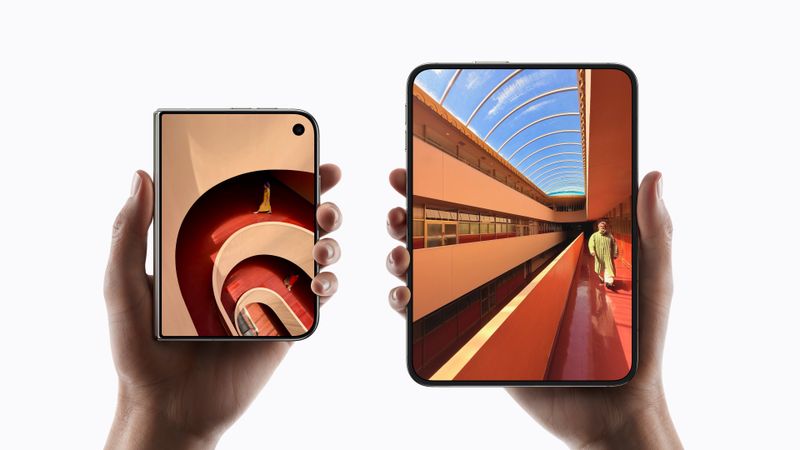
So who should buy? Working photographers and anyone whose 17 Pro battery is finished should order the Pro Max, and trade-ins make it far cheaper than the headline suggests. If you’re on a 15 Pro and don’t live behind the camera, wait. The base iPhone 18 is coming, and the foldable teased at the September 9 event will reshape pricing soon enough. My honest take is that the aperture is the first piece of iPhone camera hardware I’d genuinely miss if it vanished. The battery is fine. Fine doesn’t sell phones, and it shouldn’t have had to carry this launch.